How to Improve Night Driving Visibility Without Blinding Others


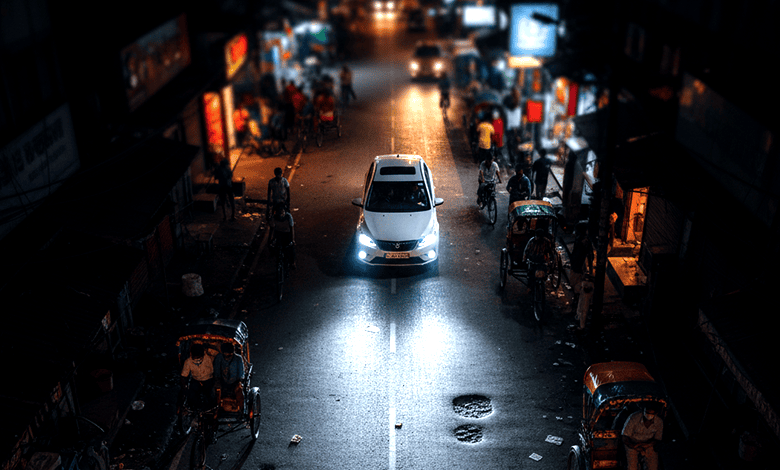
Driving at night can be more comfortable because there are fewer cars on the road, but visibility worsens after the sun goes down. Other factors, such as low ambient light, glare from oncoming vehicles, and eye fatigue, further complicate nighttime travel compared to daytime travel. Safe night driving does not only entail brighter headlights but also seeing well without annoying or blinding others on the road. This article explains why we cannot see at night, how headlights affect what we see, and how intelligent adaptations and good manners can enhance vision and reduce headlight glare for others.
The reason behind the low visibility at nighttime driving
It is a natural condition of human eyes to be poor in low-light situations. Our sense of distance and ability to observe motion and contrast are diminished at night. Pedestrians, rickshaws, cyclists, or animals occupying the background on poorly lit roads may come into focus when it is too late. Oncoming vehicles have bright or off-target headlights, which may temporarily blind a driver, resulting in eye strain and slower reaction. This is why visibility should be continually enhanced with glare control to achieve truly balanced, safe night driving.
Importance of Headlights
The headlights are made to emit light in a given pattern. Low beams illuminate the road ahead and the shoulder without forcing other drivers’ eyes, while high beams illuminate farther down the road. The issues start with misaligned headlights, incorrect upgrades, and careless use.
An effective lighting system increases clarity at road edges and helps to detect hazards in advance. One that is poorly established reflects light, creating reflections, making the process uncomfortable for all. This balance is what one must consider before any headlight upgrade.
Headlights and Their Impact
Conventional headlights (halogen) offer fair levels of brightness and are usually tolerant of glare. They are not the most brilliant choice, but when properly aligned, they are predictable and comfortable for city travel.
LED and HID headlights, in their turn, are very bright and more efficient. They can significantly enhance highway visibility when paired with appropriate projector housings and proper alignment. They, however, when placed in the wrong locations or placed in inappropriate housings, become one of the most significant sources of road glare. This is one of the reasons why the brightness should not be the sole purpose of upgrading headlights.
Essential Night Driving Visibility Tips
It does not necessarily mean that you need to replace your headlights to be seen better. Most tips on visibility during night driving are small habits and maintenance practices that drivers tend to ignore.
The simplest, yet most effective thing to do is keep your windshield and headlights clean. Light is often scattered by dirt, dust, and oxidation, making it less apparent. Headlight positioning is also a significant issue; even factory-installed headlights may shift out of position over the years due to road conditions or suspension wear.
Responsible use of low beams, driving a bit cautiously at night, and not looking directly into the headlights of oncoming vehicles will ease eye strain. These modifications help you see better and intuitively help you drive safely at night without inconveniencing others.
How to Minimize Headlight Glare for Other Drivers?
It is not only irritating, but glare is also unsafe. Too-bright or misaimed headlights may temporarily blind another driver and increase their risk of a car accident. To minimize headlight glare, motorists ought not to install high-intensity bulbs in fittings that do not support them, and also ought not to tilt their vehicles upwards due to the heavy weight carried at the rear.
Reverting to low beam at an early stage, before reaching the traffic, and limiting dashboard lights also help reduce eye strain and reflections. Night roads are a collective responsibility, requiring everyone to use lighting to make them safer.
How to select the right headlight upgrade to drive safely at night?
Brighter headlights are not required for all cars. In urban driving, an adequate alignment of stock headlights is usually sufficient. A well-chosen upgrade to the headlights with proper beam cutoff would enhance visibility at a distance without increasing glare, especially for frequent travel on highways or in rural areas.
The safest solution aims to regulate light distribution rather than peak brightness. When visibility becomes possible without causing pain to others, the upgrade has attained its real meaning.
Final Thoughts
Improved night driving clarity is related to equilibrium, consciousness, and accountability. Clear lights are not enough to be safe; brightness, control, and thoughtfulness are needed. Keep your headlights clean, be a careful driver, and make a wise choice of upgrades, and you will ensure your safety and prevent other road users from receiving undue glare. Safe night driving benefits everyone on the road.
Frequently Asked Questions
1. Why is glare from headlights more dangerous at night?
Glare disrupts contrast and can temporarily render drivers unconscious, increasing reaction time and the risk of accidents.
2. Will increased headlights necessarily enhance visibility?
No. The brightness should be controlled because it causes glare and reduces visibility along the entire road.
3. What is the frequency of headlight checking?
The frequency of headlight checking is once per year, when new suspension repairs are required, or after minor collisions.
4. Are dirty headlights a real issue for visibility?
Yes, dirt and oxidation do scatter light and do a lot to make things ineffective.
5. How can the visibility of the night be enhanced most safely?
Integrate proper headlight position, clean lenses, responsible beam use, and prudent upgrades.