Riding a Motorcycle in Heavy Rain: Safety Techniques Every Rider Should Know


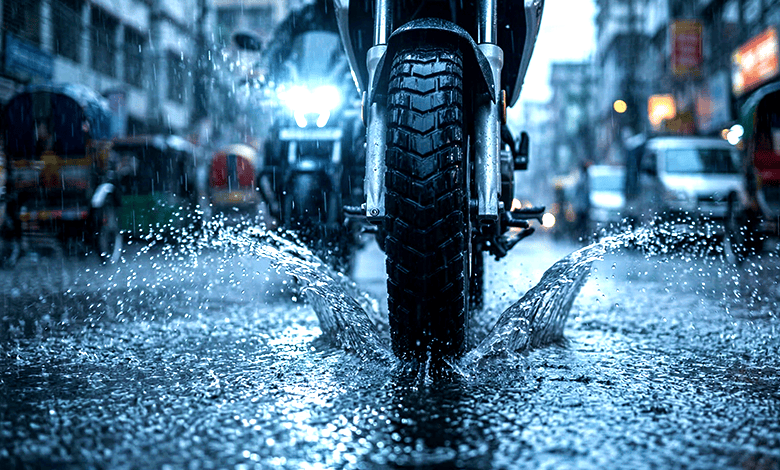
One of the most challenging situations for any rider is riding a motorcycle in heavy rain. This is especially true for urban and highway roads in Bangladesh. Many factors, such as waterlogged streets, reduced visibility, slippery surfaces, and sudden traffic movements, significantly increase the risk. Skill alone is not enough in such conditions. Riders also need proper techniques and strong awareness. Let’s see what you should keep in mind while riding in heavy rain.
Slow Down and Stay Smooth
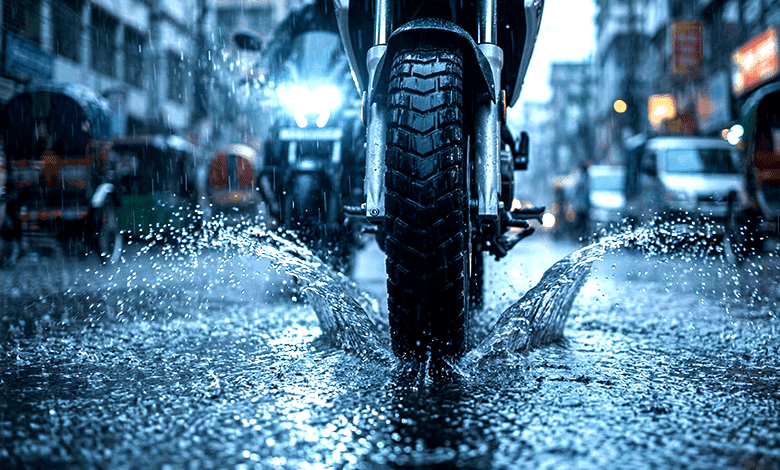
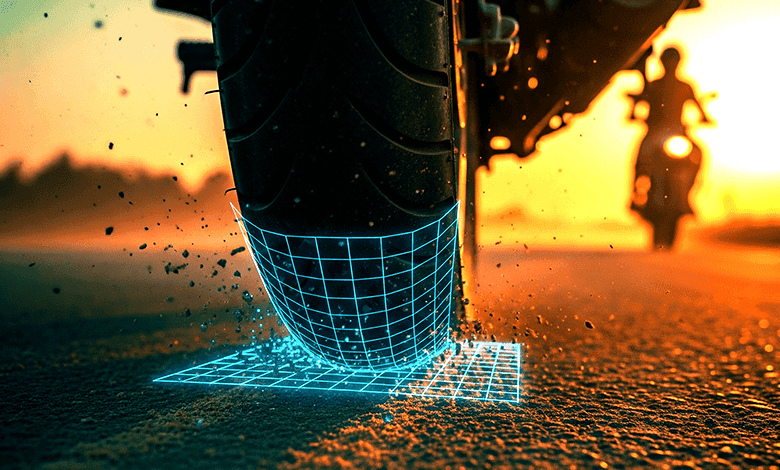
The rule of thumb when riding in heavy rain is to reduce speed. Wet roads significantly reduce tyre grip. It increases braking distance and the chances of skidding. That’s why you should avoid sudden acceleration, hard braking, or sharp cornering. Instead, maintain a steady throttle and apply brakes gently. This will help you maintain balance and traction.
Increase Following Distance
You should keep a minimum following distance of 4-5 seconds while riding in wet conditions. But this needs to increase if you are riding in heavy rain. Vehicles ahead may brake suddenly due to low visibility or obstacles hidden by water. So, extra distance gives you more reaction time and prevents collision risks.
Avoid Waterlogged and Painted Surfaces
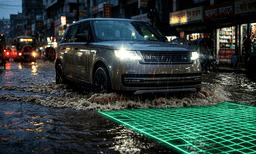
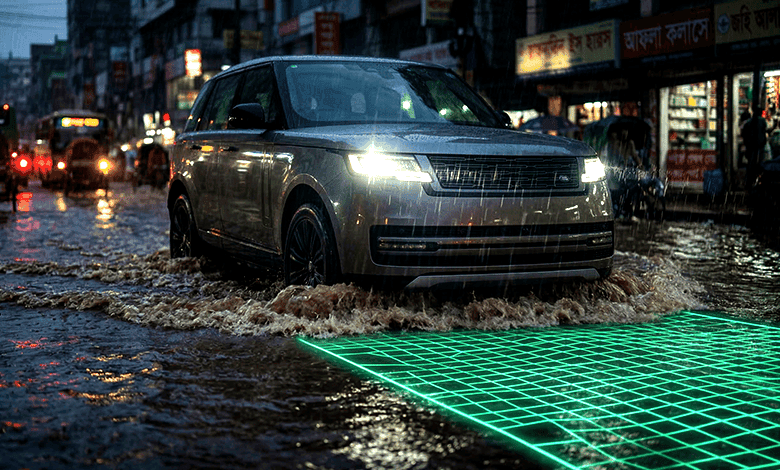
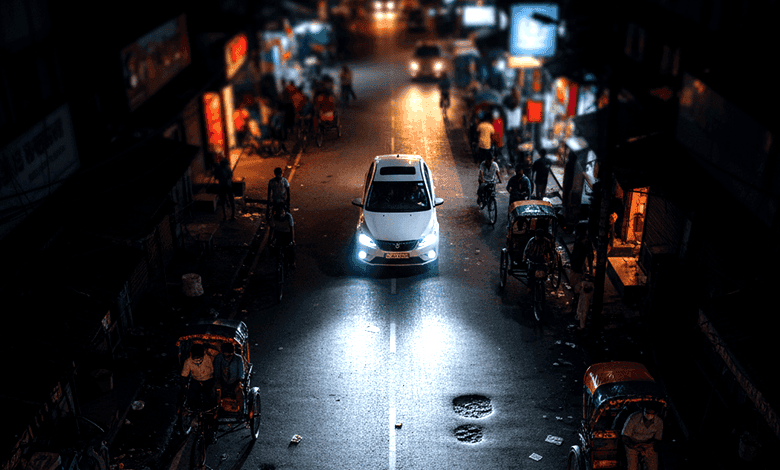
Potholes, open drains, or debris can hide under still water. So, try to avoid deep water areas whenever possible. You should also be cautious of painted road markings, metal covers, and bridge joints. These surfaces become extremely slippery when wet and can cause sudden loss of control.
Use Both Brakes Carefully
Proper braking technique in the rain is crucial. Use both front and rear brakes smoothly rather than relying on one heavily. The front wheel may lock if you apply sudden pressure to the front brake. That’s why motorcycles equipped with ABS provide additional safety. But controlled braking is still necessary anyway.
Wear Proper Rain Gear
Proper rain gear helps riders maintain better control. So you should not consider waterproof riding jackets, gloves, and boots just for comfort. These are important for your safety as well. Wet hands can slip from the throttle or brake lever. So, proper rain gear keeps you focused and prevents discomfort that may distract you while riding.
Improve Visibility
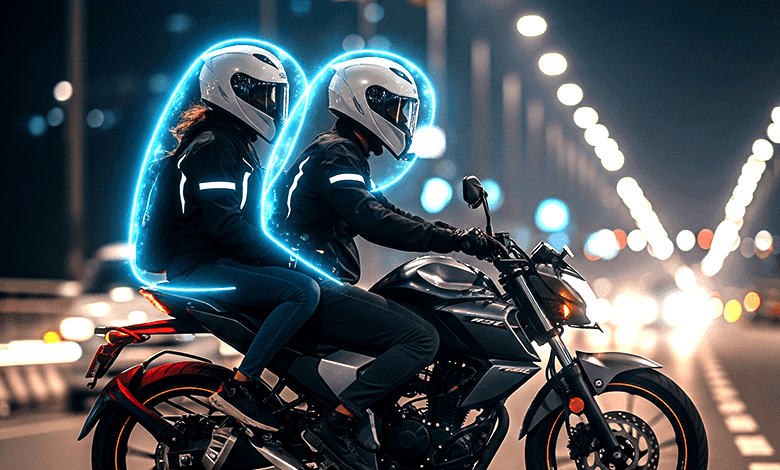
Heavy rain can significantly reduce visibility for you and other drivers. So, you should always turn on your headlights. Make it a habit, even if it is during daytime rain. Carry a clear visor and keep it clean. Don’t go for tinted visors in dark or rainy conditions. Reflective riding gear also helps other drivers easily notice you in heavy rain.
Conclusion
It takes patience, discipline, and advanced control techniques to ride a motorcycle in heavy rain. You should always reduce speed, increase distance, brake smoothly, and stay highly alert while riding in wet conditions. Adjust your riding style according to road and weather conditions. You should always prioritize safety over speed or convenience in heavy rain.
Frequently Asked Questions
1. Is it safe to ride a motorcycle in heavy rain?
Yes. But only if you reduce speed, maintain proper distance, and use correct riding techniques.
2. What is the minimum following distance in rain?
The minimum following distance in rain should be 4-5 seconds.
3. Is it safe to ride through still water?
Not always. Water can hide potholes and dangerous obstacles. Ride slowly and cautiously through standing water.
4. Does ABS help in rainy conditions?
Yes. ABS reduces the chances of wheel lock during sudden braking.
5. Which visor is best for heavy rain?
A clear visor is the safest option in low-light and rainy conditions.