Types of Traffic Signs, Importance of Traffic Signs, and Function of Traffic Lights


Many lives are lost in road accidents in our country today. Most of these accidents occur because traffic signs or signals are not properly followed while driving. Some people understand the signs but ignore them anyway, which often leads to accidents.
Therefore, to travel and drive safely on the road, we must properly understand traffic signs and signals.
Traffic Signs
Traffic signs are symbols or signals that provide you with information while driving and crossing roads and protect you from potential hazards. They are also called road signs.
They are designed to ensure the safety of pedestrians and drivers.
If traffic signs are followed correctly, the number of accidents can be significantly reduced.
People have been using traffic signs since ancient times. The ancient Romans used stone-carved signs to guide pedestrians.
Later, after the invention of the bicycle, traffic signs began to take their modern form.
These signs were used to warn cyclists about dangerous objects ahead or upcoming curves in the road.
Gradually, they became applicable to motorists as well. They were made to ensure safe driving.
Types of Traffic Signs
Traffic signs are mainly of two types: visible signs and invisible signs.
Visible Traffic Signs: These are the signs we see with our eyes, such as traffic lights, signals from traffic police, and warning symbols on various banners.
Invisible Traffic Signs: These signs are not seen; they are expressed through sound, hence also called audible signals—for example, a traffic police whistle or a vehicle horn.
Types of Visible Traffic Signs
There are five types of visible traffic signs in Bangladesh:
- Mandatory positive traffic signs
- Mandatory negative traffic signs
- Warning traffic signs
- Informational traffic signs
- Special warning traffic signs
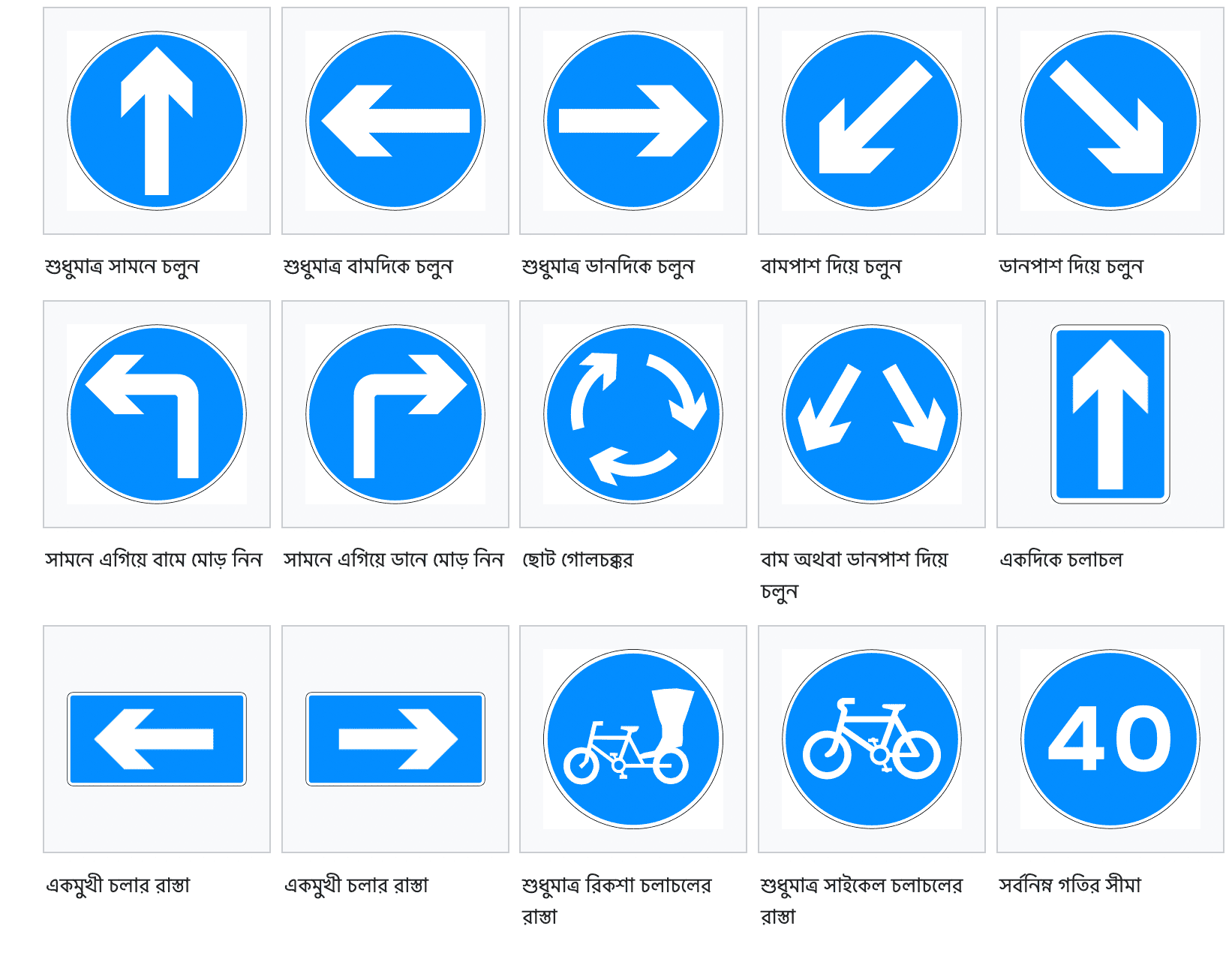
1. Mandatory Positive Traffic Signs
These signs are used to give positive instructions to road users.
Examples: “Proceed straight,” “Keep left,” “Left turn ahead,” “Roundabout—circulate here,” etc.
These are generally blue and circular, though sometimes square or rectangular.
2. Mandatory Negative Traffic Signs
These signs prohibit certain actions by pedestrians or drivers.
Examples: “No parking,” “No entry,” “No right turn,” “No left turn,” etc.
These are mainly red and circular, and can also be square or rectangular.
3. Warning Traffic Signs
These signs alert pedestrians or drivers to hazards or conditions ahead.
Also known as warning signs.
Examples: “Right curve,” “Left curve,” “Pedestrian crossing,” etc.
These are usually red and triangular.
4. Informational Traffic Signs
These are not always critical but provide necessary information about locations to pedestrians and drivers.
They typically include place names and directions.
In Bangladesh, informational signs are generally blue or green and rectangular.
5. Special Warning Traffic Signs
These are not used everywhere or all the time; they are used in specific places and at specific times.
Examples: “Sharp left turn,” “Temporary detour,” “Road closed,” etc.
Traffic Lights
Among visible traffic signs, traffic lights are the most familiar. There are two types of traffic lights:
One for drivers and one for pedestrians.
Driver traffic lights use three colors: red, green, and yellow.
- Red: Indicates prohibition—stop.
- Green: Indicates permission to proceed.
- Yellow: Indicates caution—prepare to stop or that permission will change soon.
Pedestrian traffic lights use two signals: red and green.
Red means stop; green means walk.
Invisible Traffic Signs
Invisible or audible traffic signals are not categorized further. Any instruction given through sound for traffic purposes is considered an invisible sign.
Examples: Honking to alert pedestrians while crossing, traffic police whistle, etc.
Importance of Traffic Signs for Safe Road Use
1. Provide uniform rules for all drivers
Using standardized traffic signs nationwide makes them easy to understand. That’s why most signs use pictograms.
2. Protect drivers and pedestrians
Without traffic signs, roads would be very dangerous. They play a crucial role in preventing accidents.
3. Enhance safety for pedestrians and cyclists
They indicate safe crossing points and where to stop.
4. Control excessive traffic
Guidance at intersections and roundabouts reduces congestion and chaos.
5. Help you reach your destination
They make travel easier with road names, turns, and directions.
6. Guide new drivers
Traffic signs are especially helpful for beginners.
7. Reduce road accidents
Following the rules significantly lowers accident rates.
Conclusion
There is no alternative to following traffic signs for safe travel. Everyone must also stay aware of traffic laws.
Meta Description: Complete guide to traffic signs, types of traffic signs, importance of traffic signs, and how traffic lights work.