Dhaka Takes Action to Reduce Honking: Fines Imposed in Airport and Gulshan-Banani Silent Zones


3 mins read
3 mins read
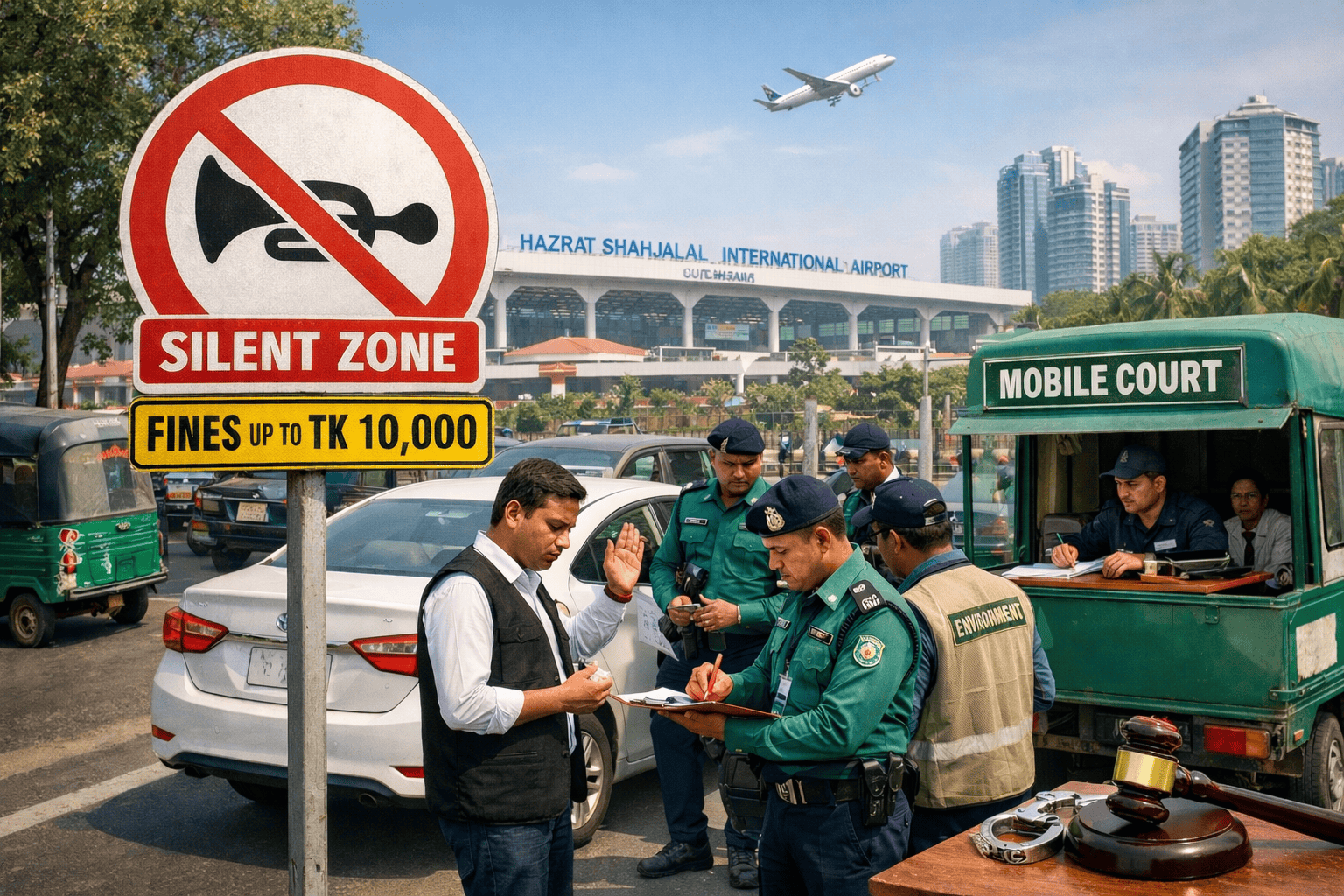
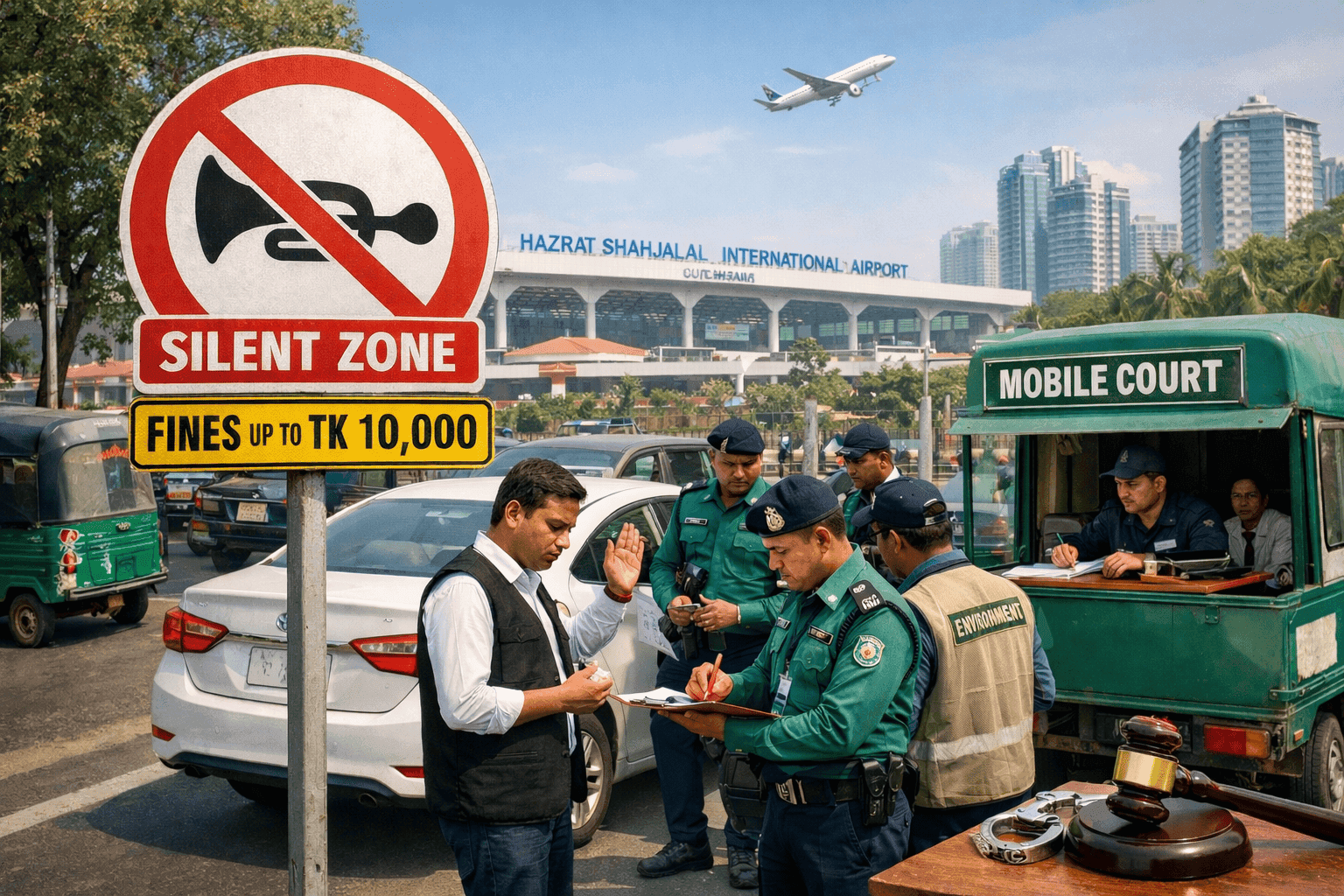
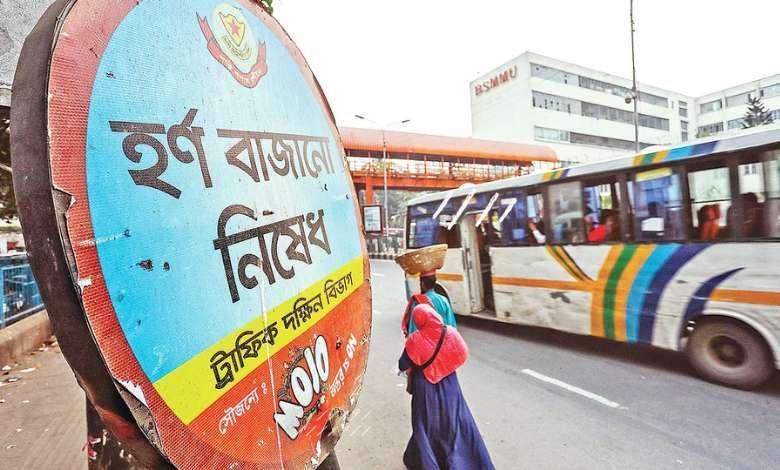
The Dhaka Metropolitan Police (DMP) has transitioned from merely announcing to actively enforcing measures to reduce unnecessary honking in key parts of the capital. Starting January 25, authorities began strictly enforcing a ban on vehicle horns in designated “silent areas,” including Hazrat Shahjalal International Airport and the upscale neighborhoods of Gulshan, Banani, Baridhara, and Niketan. These efforts are intended to cut down noise pollution and foster calmer, more organized traffic conditions.
Although these zones were officially designated as silent areas under the Noise Pollution (Control) Rules, 2025, in September last year, the enforcement had largely been on paper until now. With this renewed push, the DMP’s Traffic Division is actively penalizing drivers who violate the rules. Those caught honking in the silent zones could face fines of up to BDT 10,000, imprisonment for up to three months, or both. Officials emphasize that these penalties underscore the seriousness of noise pollution as an increasingly challenging problem in the city.
To promote compliance, special mobile courts have been set up in the restricted areas. These courts involve magistrates from various government agencies, including the Department of Environment, the Bangladesh Road Transport Authority (BRTA), the Civil Aviation Authority, the Dhaka North City Corporation, and the DMP. Their task is to hear cases and immediately impose fines or sentences. Police officials describe this coordinated effort as crucial for turning the quiet zones from mere ideas into real change.
Local traffic experts and residents have shared mixed feelings. Some are pleased, hoping it will lead to quieter streets and a better quality of life, especially in neighborhoods like Gulshan and Banani, where constant honking has long been a problem. Others acknowledge that it will take time to change ingrained driving habits and suggest that public awareness campaigns should run alongside enforcement to help drivers understand when honking is truly needed and when it is just disruptive.
Early signs indicate that the crackdown is starting to make a difference. On the first day of stricter enforcement near the airport, authorities handled dozens of cases and collected fines totaling over BDT 1,00,000 as drivers adjusted to the new rules. Police say they will continue similar operations in the coming weeks to keep the momentum and remind drivers of the social and legal consequences of unnecessary honking.
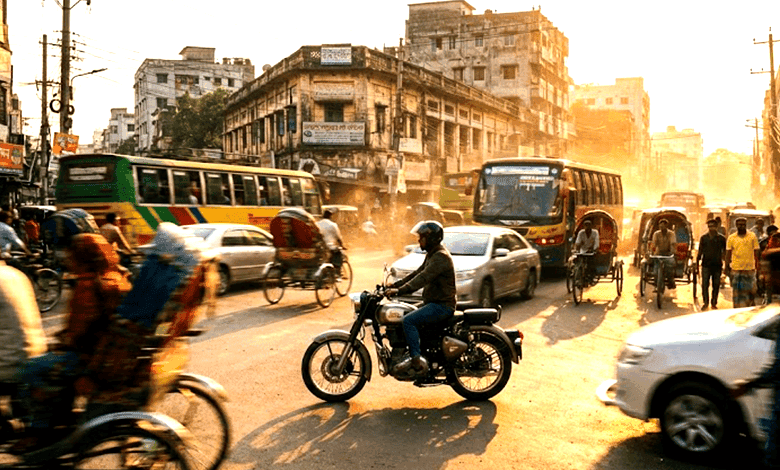
As Dhaka struggles with ongoing traffic jams and urban noise, the honking ban is a significant effort by law enforcement and community groups to create a more peaceful city environment. However, its long-term success will rely not only on fines but also on changes in driver habits and broader cultural acceptance.
Although these zones were officially designated as silent areas under the Noise Pollution (Control) Rules, 2025, in September last year, the enforcement had largely been on paper until now. With this renewed push, the DMP’s Traffic Division is actively penalizing drivers who violate the rules. Those caught honking in the silent zones could face fines of up to BDT 10,000, imprisonment for up to three months, or both. Officials emphasize that these penalties underscore the seriousness of noise pollution as an increasingly challenging problem in the city.
To promote compliance, special mobile courts have been set up in the restricted areas. These courts involve magistrates from various government agencies, including the Department of Environment, the Bangladesh Road Transport Authority (BRTA), the Civil Aviation Authority, the Dhaka North City Corporation, and the DMP. Their task is to hear cases and immediately impose fines or sentences. Police officials describe this coordinated effort as crucial for turning the quiet zones from mere ideas into real change.
Local traffic experts and residents have shared mixed feelings. Some are pleased, hoping it will lead to quieter streets and a better quality of life, especially in neighborhoods like Gulshan and Banani, where constant honking has long been a problem. Others acknowledge that it will take time to change ingrained driving habits and suggest that public awareness campaigns should run alongside enforcement to help drivers understand when honking is truly needed and when it is just disruptive.
Early signs indicate that the crackdown is starting to make a difference. On the first day of stricter enforcement near the airport, authorities handled dozens of cases and collected fines totaling over BDT 1,00,000 as drivers adjusted to the new rules. Police say they will continue similar operations in the coming weeks to keep the momentum and remind drivers of the social and legal consequences of unnecessary honking.
As Dhaka struggles with ongoing traffic jams and urban noise, the honking ban is a significant effort by law enforcement and community groups to create a more peaceful city environment. However, its long-term success will rely not only on fines but also on changes in driver habits and broader cultural acceptance.