What Happens If You Skip Regular Wheel Alignment on Rough Roads


Wheel alignment is the process of keeping a car at the correct angles and parallel to the road. This allows the car to run straight and steadily. Regular travel on bumpy roads, speed breakers, broken, uneven, or potholed roads puts considerable pressure on the car's tires, wheels, and suspension. Bumps and jolts on rough roads compromise the car's alignment. This reduces the driver's control and puts stress on the car. Many of us do not pay attention to this. This reduces the car’s performance and stability, as well as the risk of major accidents.
Regular wheel alignment should be done if you travel on rough roads. Ignoring wheel alignment reduces tire durability, reduces handling and stability, increases fuel consumption, and damages various parts. This blog discusses in detail what can happen if you do not do regular wheel alignment on rough roads.
What problems occur in a car if regular wheel alignment is not done on rough roads?
Regular travel on uneven or rough roads can cause the 3 main angles of a car's wheel alignment (camber, toe, and caster) to become unbalanced. This can lead to the car leaning to one side, tire wear, steering shaking, and even loss of control.
1. Rapid, uneven tire wear
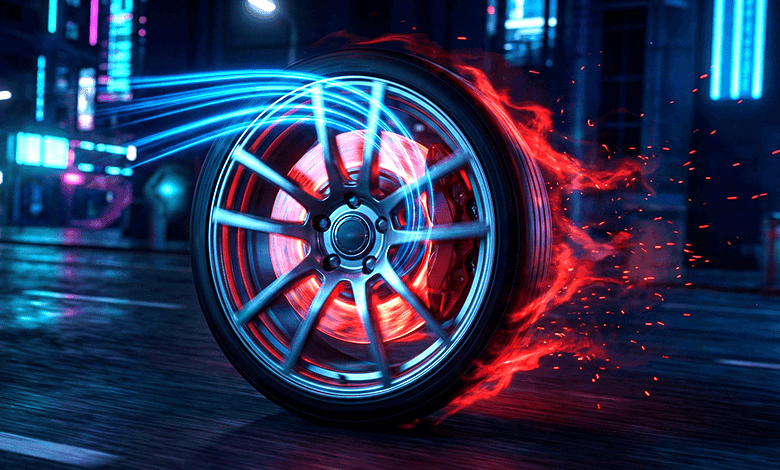
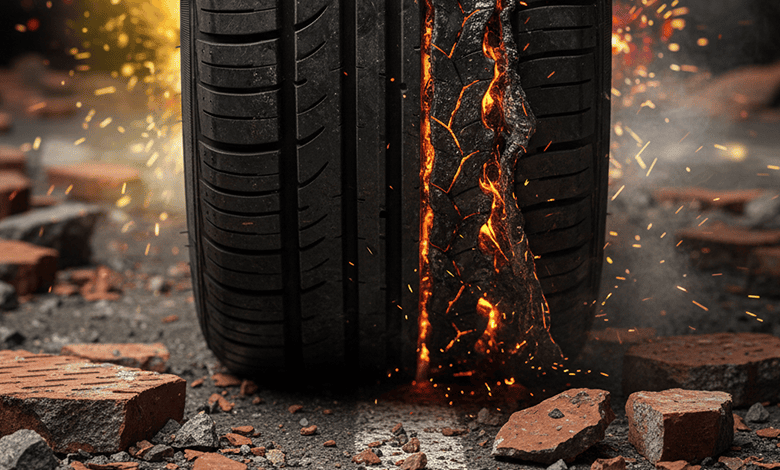
If regular wheel alignment is not done, the wheels are not properly parallel to the road. This causes the car to lean to one side, putting pressure on a specific wheel part. This causes rapid tire wear. When the tire grip wears out, the wheels cannot turn easily and slip on wet roads. When tires are worn out, it becomes difficult to turn the car. This type of uneven tire wear can be caused by camber or toe misalignment. This problem can be avoided by regularly checking the alignment.
2. Stress on suspension and other parts
If the wheel alignment is not correct, the car's suspension and related parts are put under excessive stress. Suspension parts continue to work against each other, damaging the car's ball joints, tie rods, springs, and suspension bushes. The ability to absorb road shocks decreases. Suspensions deteriorate over time and may eventually require expensive servicing.
3. Problems with handling and steering control
If there is an alignment issue, steering control may be affected. Even if you release the steering wheel on a straight road, the car may not move off-center. In addition, the steering wheel shakes at high speeds. If the alignment is not correct, the car may slip while cornering or turning. Poor alignment makes high-speed driving on rough or uneven roads dangerous.
4. How do fuel and operating costs increase
If the wheel alignment is incorrect, the wheels cannot rotate smoothly. This requires the engine to apply more power, which increases fuel consumption. It also increases the damage to other parts. If the vehicle is driven in this condition for a long time, the tires, bearings, bushings, shock absorbers, steering, etc., are damaged, significantly increasing maintenance costs.
5. Safety risks increase
Safety risks are the biggest issue. If the alignment is off, the steering will not be straight, and the car may move to one side. On uneven roads, tire grip deteriorates prematurely, and if the alignment is off, the car may skid on rainy days or during emergency braking. Poor handling increases the risk of cornering. In addition, the ride quality also deteriorates on bad roads, so it is not possible to drive comfortably.
Signs of damaged wheel alignment and when to check
Final Thought
Although the highways in Bangladesh are fairly good, most roads in cities and rural areas are uneven. In addition, there are potholes and frequent speed breakers on the roads. Alignment problems can reduce vehicle stability on steep and slippery roads. If there are signs of alignment damage, check immediately and show it to the servicing center. Failing to maintain regular wheel alignment on rough roads can cause long-term damage to the car and pose safety risks.
Frequently Asked Questions
1. What is wheel alignment?
Wheel alignment keeps the car's wheels at the right angle and parallel to the road. This allows the car to move straight and steadily.
2. What are the first problems that appear if regular wheel alignment is not done on bad roads?
Uneven tire wear occurs quickly. This causes the car to lean to one side, the steering wheel to shake, and even poses a risk of losing control.
3. How do you know if the alignment is damaged?
The steering wheel does not stay straight while driving. Even if the steering wheel is kept straight, the car moves to the right or left. And if you feel vibration inside the car, you will know that the alignment is damaged.
4. Does the alignment not work properly affect fuel consumption?
If the wheel alignment is incorrect, the wheels cannot rotate smoothly. This requires the engine to apply more power, which increases fuel consumption.
5. How often should the alignment be checked on rough roads?
Wheel alignment should be checked every 3 months when traveling on rough roads.